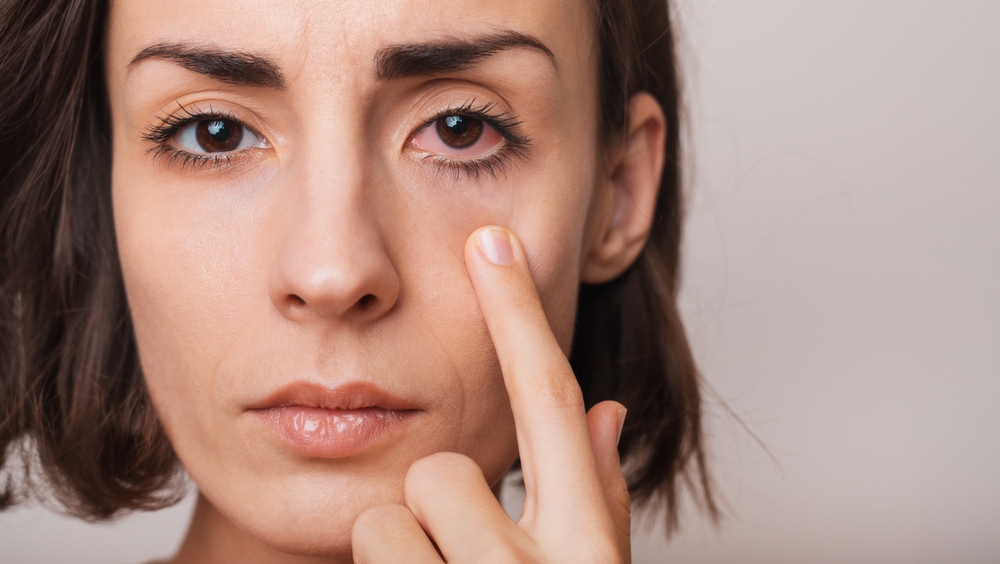


According to the American Academy of Ophthalmology, dry eye affects 1 in 5 women and 1 in 10 men in the United States alone. This irritating and painful condition usually causes burning and blurred vision and can negatively affect one’s quality of life.
Allergies and Migraines
A survey conducted by the Association of Research in Vision and Ophthalmology may have discovered some statistical significance when it comes to dry eyes and allergies and migraines. After analyzing survey answers from seven clinical sites, patients who experienced migraine headaches had a higher rate of dry eyes. In addition, forty-five percent of the participants saw an allergist.
It’s easy to confuse dry eye symptoms with those of allergies, though, according to Dr. Mayli Davis, DDS, of Advanced Eyelid Surgery Center in Fort Worth, Texas.
“The symptoms of both allergies and dry eyes are often similar, but treatment is different,” she said. “In fact, treating dry eyes with allergy medicines can actually make it worse. When you have allergies, your eyes may water when exposed to allergens. When you have dry eye syndrome, your eyes may be watery at times, and dry, itchy and gritty at other times.”
Hyperthyroidism
When the thyroid gland is overactive and produces more hormones than it should, hyperthyroidism occurs. Among other health issues, this disorder can trigger dry eye syndrome, sometimes called thyroid eye disease when hyperthyroidism is present and identified as the cause. The symptoms usually include dry, watery or red eyes, difficulty closing eyes, bulging eyes and problems with vision.
Blepharitis
Marked by inflammation in the eyelids, Blepharitis is an eye disorder that can be caused by bacteria or sometimes, a result of a skin condition such as dandruff of rosacea. Although it may look contagious, it’s not. Symptoms can include burning, itchy, red and swollen eyelids, along with dry eyes.
Tear Production
One of the most common causes of dry eyes occurs when the body can’t produce enough tears to keep eyes lubricated. It can be caused by aging, medications, eye surgery and medical conditions. Some of these medical conditions include thyroid disorders, diabetes, rheumatoid arthritis, lupus and Sjogren’s syndrome among others.
Another concern in tear production can occur when there is an imbalance in the oil, water and mucus composition that tears are made of.
“The meibomian glands produce oils at the edges of the eyelids that help smooth the surface of the tears and slow down the process of evaporation,” said Davis. “If there isn’t enough of these oils, evaporation can happen too quickly, resulting in dry eyes. The tear glands produce a water and salt mixture that help wash away irritants and keep eyes clean. And the innermost layer of mucus helps the tears to evenly distribute over the eye. Problems with any of these can cause dry eyes and the complications that accompany the disorder.”
Dry eyes can be painful, uncomfortable and irritating. Suffering from this disorder can greatly reduce one’s quality of life as we use our eyes all day, every day. Talk to your doctor today if you are experiencing the symptoms of dry eye disorder to find out what is causing it and which treatment would be best for you.